Panorama “The Epopee of Pleven 1877”

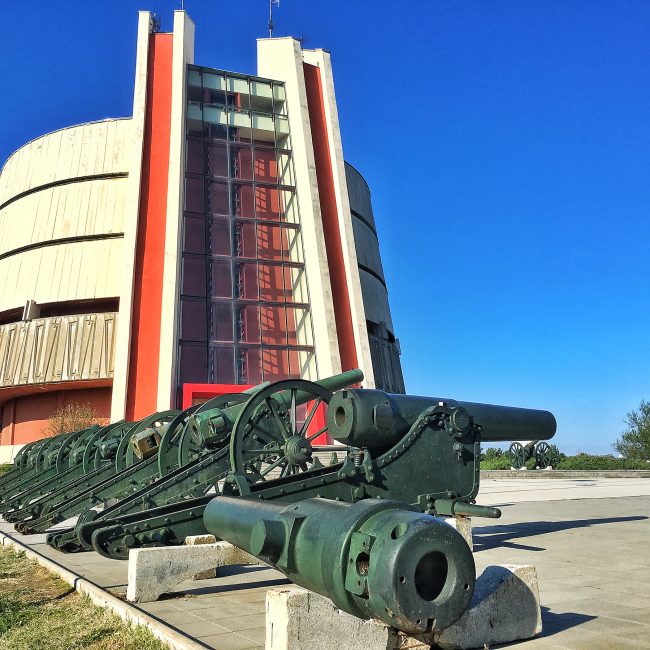
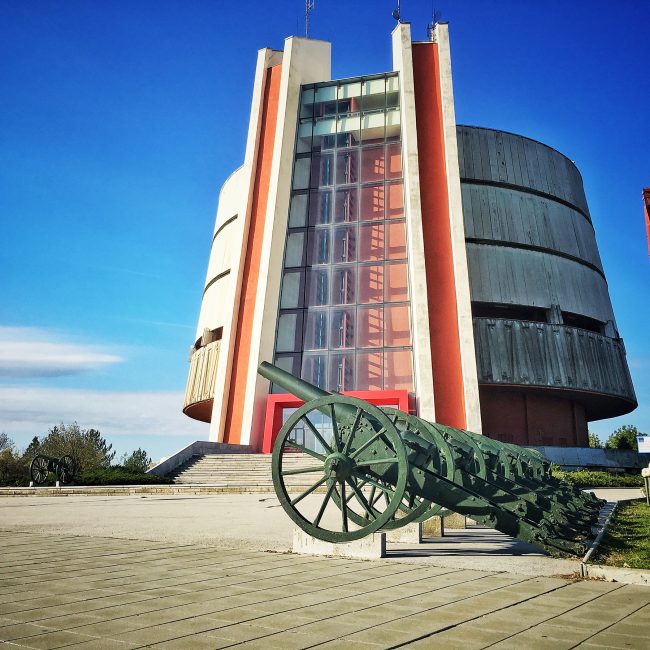
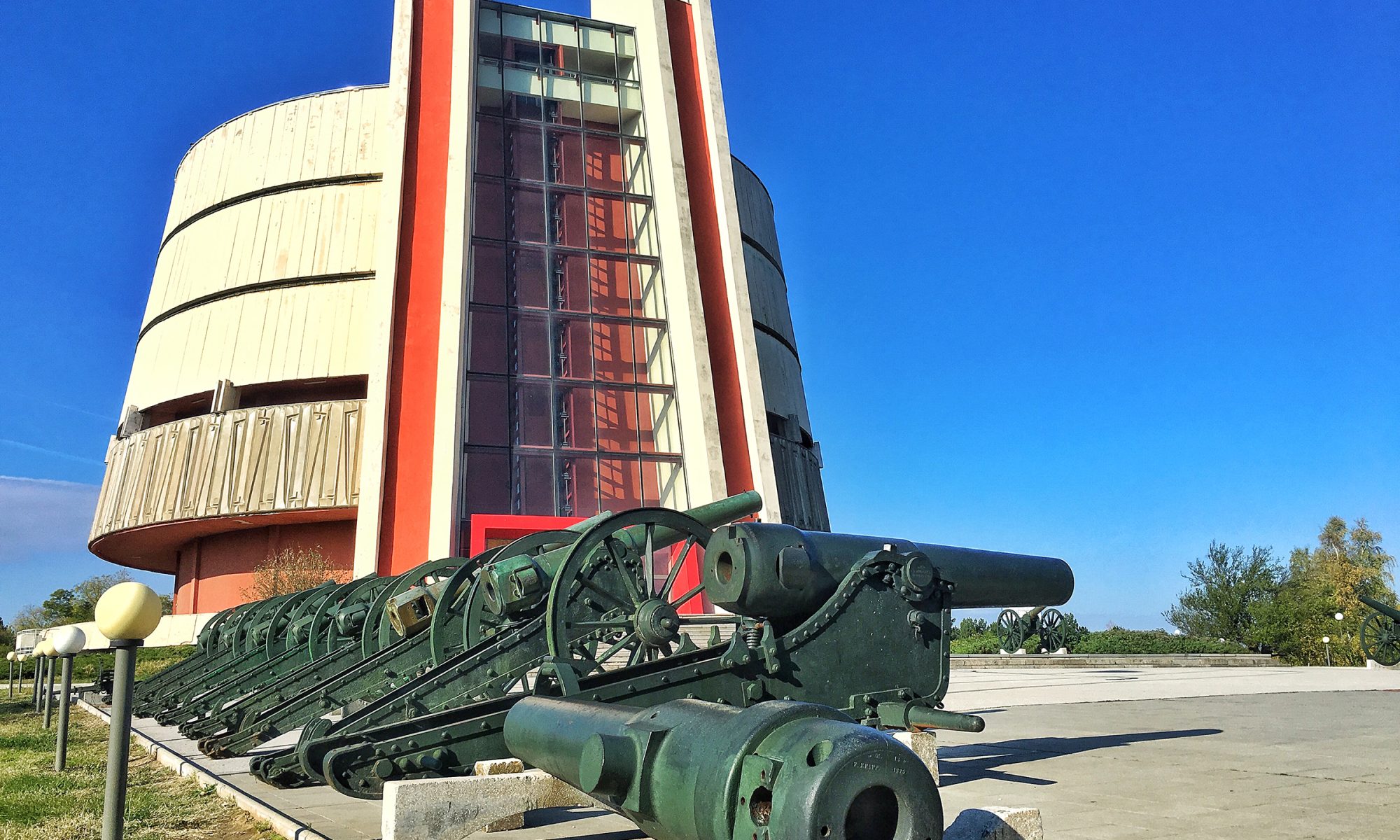
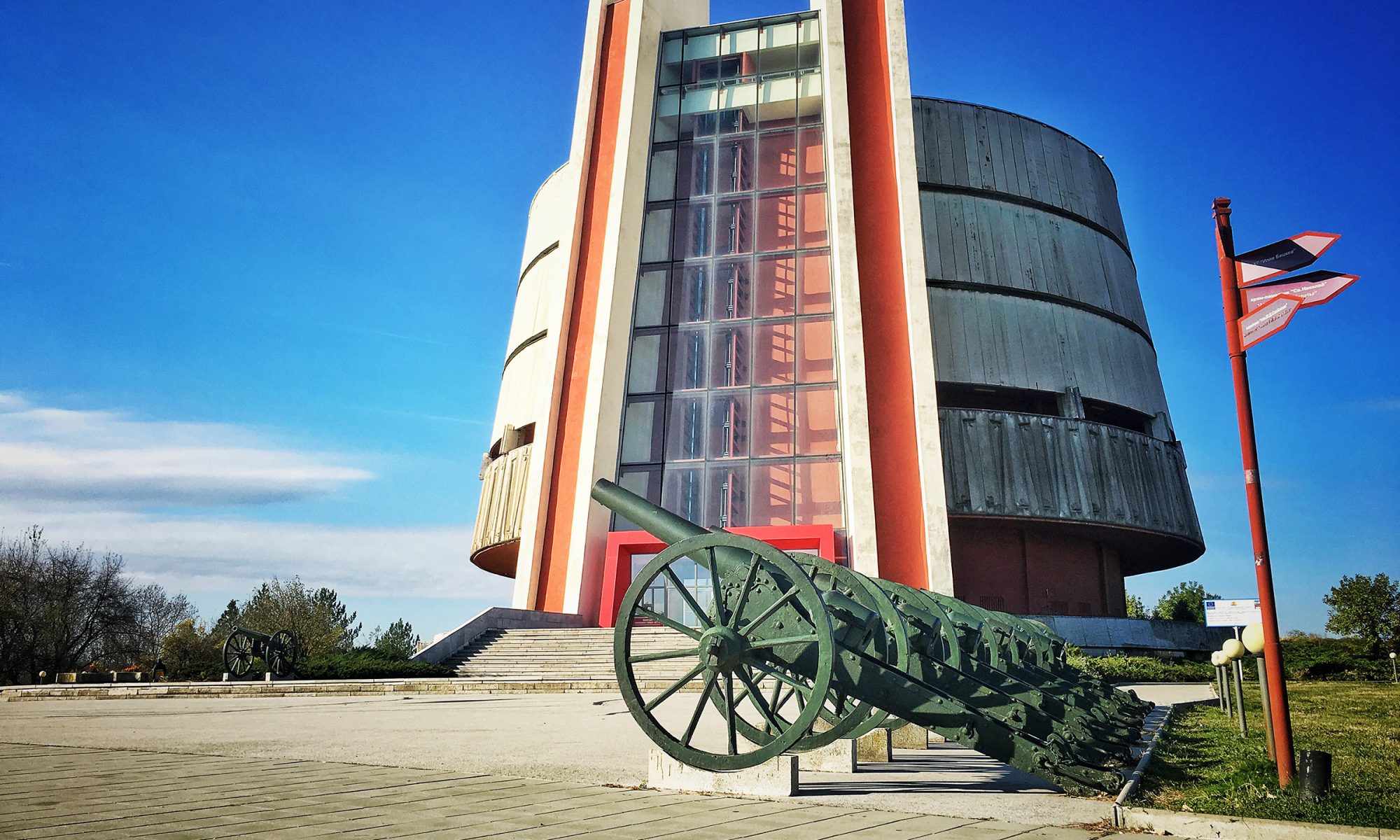
Panorama “The Epopee of Pleven 1877” was built in 1977 on the occasion of the 100th anniversary of the liberation of Pleven, on the very place of the former battlefield in Skobelev Park – Museum. It was designed by Plamena Tsacheva and Ivo Petrov and a group of designers. The construction of that monument began on 19th January 1977. The inauguration was on 10th December 1977, on the very day of the 100th anniversary of the liberation of Pleven.
Nickolay V. Ovechkin (Military Studio “M. Grekov” – Moscow, Russia) was the author of the artistic part. 13 Russian and Bulgarian artists (V. Sherbakov, I. Kabanov, A. Chernishov, M. Annaniev, N. Ovechkin, D. Donchev, V. Essaulov, V. Lemeshev, Hr. Boyagiev, G. Essaulov, V. Tautiev, Y. Ussipenko, A. Trotsenko) painted the canvas under the guidance of Ovechkin.
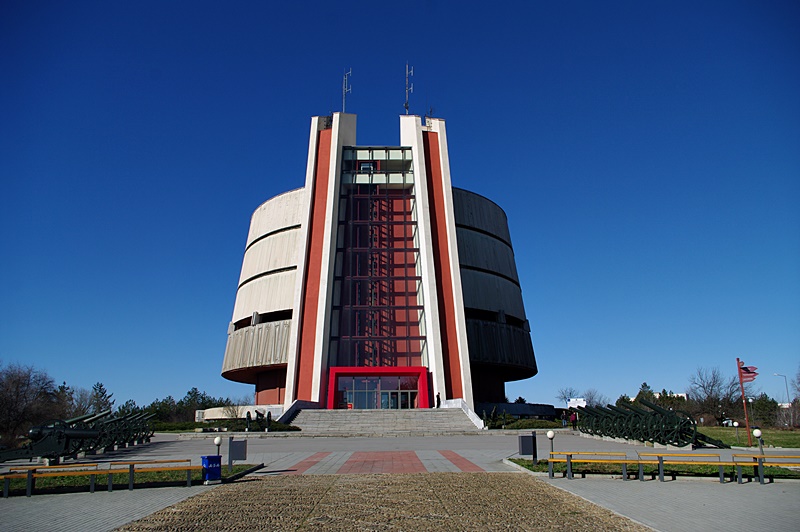
The building is cone-shaped, supported by four stylized bayonets. Three horizontal rings symbolize the three attacks at Pleven. The ring with the bayonets symbolizes the blockade of the town. The building is 47 metres high, with a total measurement of 54 000 cubic m.
Panorama “The Epopee of Pleven 1877” consists of four halls – Introductory Hall, the Panorama, the Diorama and Final Hall.
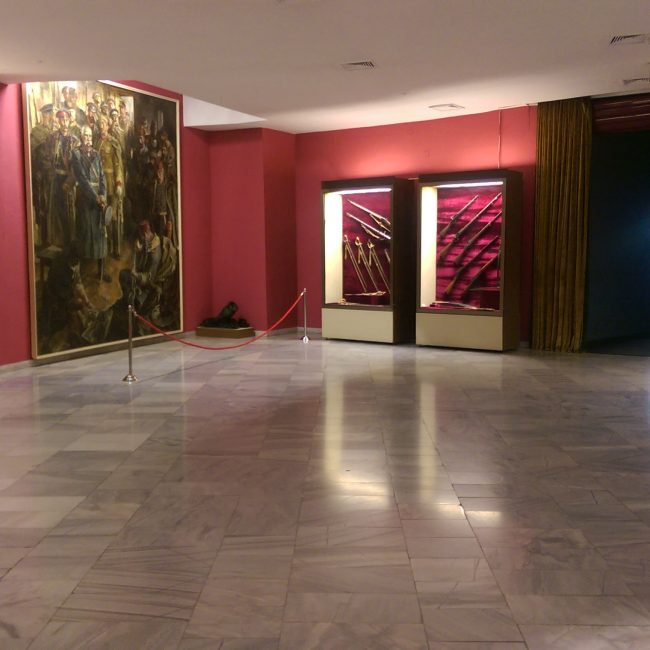
Introductory Hall
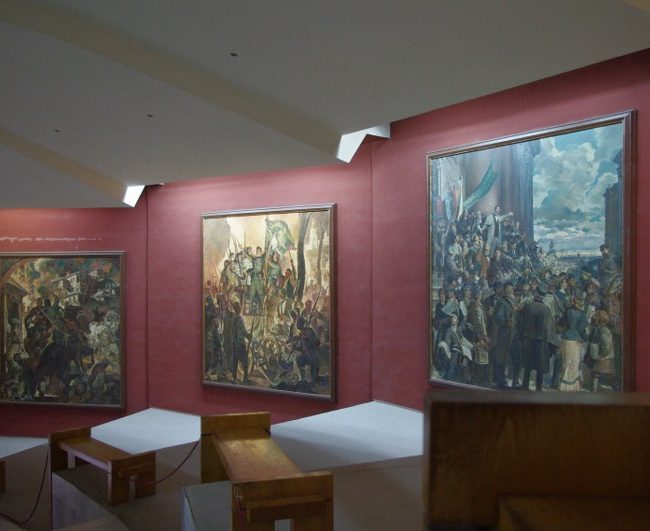
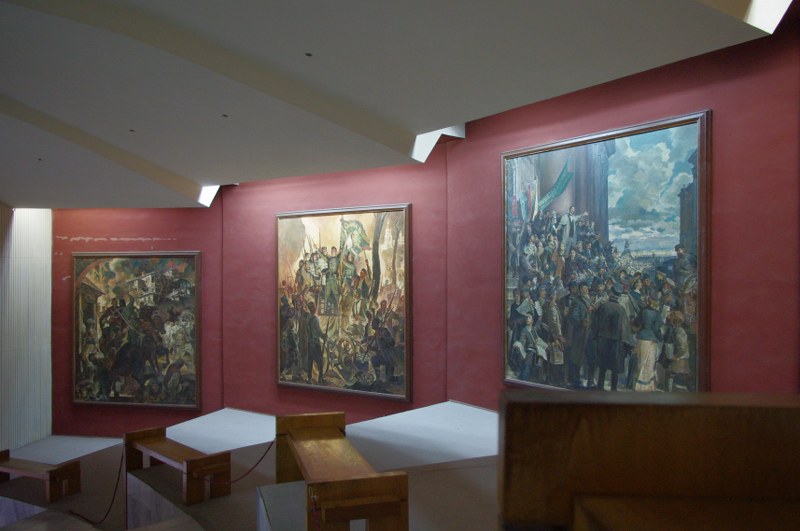
6 artistic pictures (4 x 3.60 m) show events of the Bulgarian history and the Russo-Turkish war 1877-1878:
The Ottoman Yoke
The April uprising
A demonstration in St. Petersburg in support of the Bulgarian people
The Russian army crossing the Danube
Defending the Samara flag
The fight at Shipka
Panorama
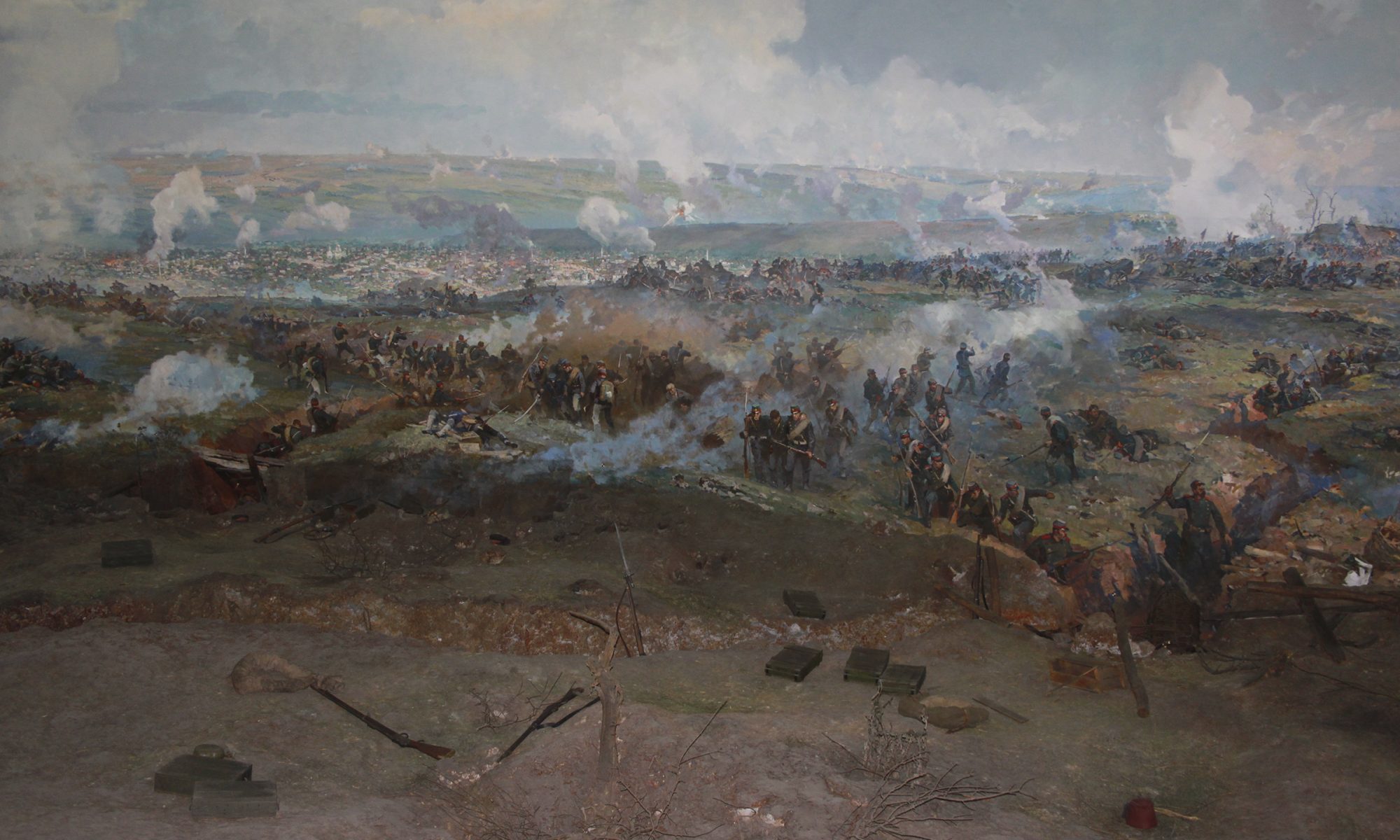
The canvas (115 x 15 m) was made of linen with only one connecting vertical seam. The diameter is 40 m. The whole area together with the foreground is 2375 sq. m. The depicted prospect is about 8-12 km in depth.
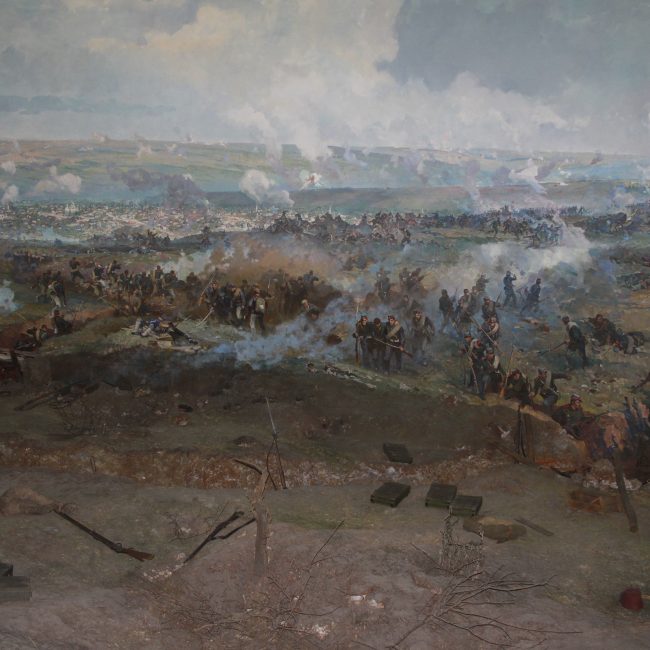
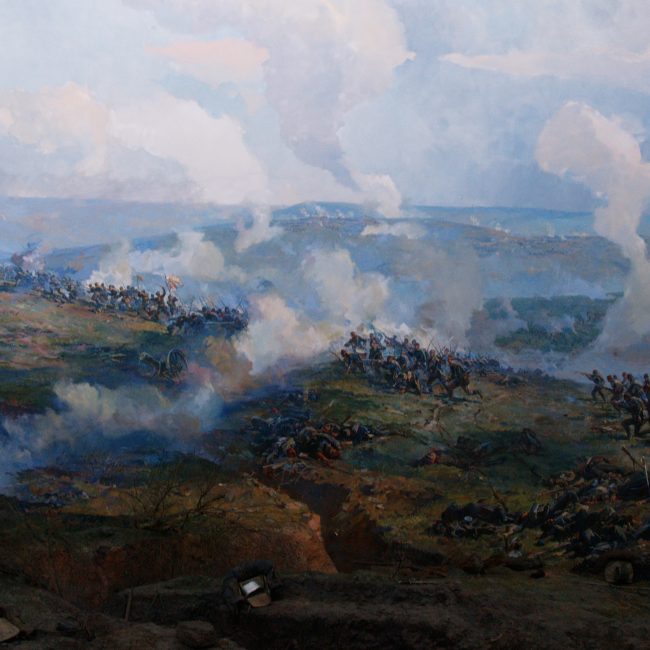
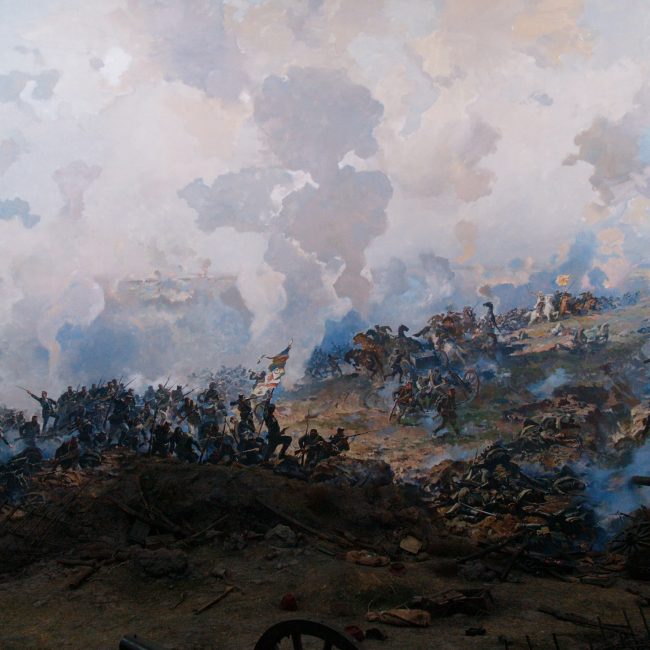
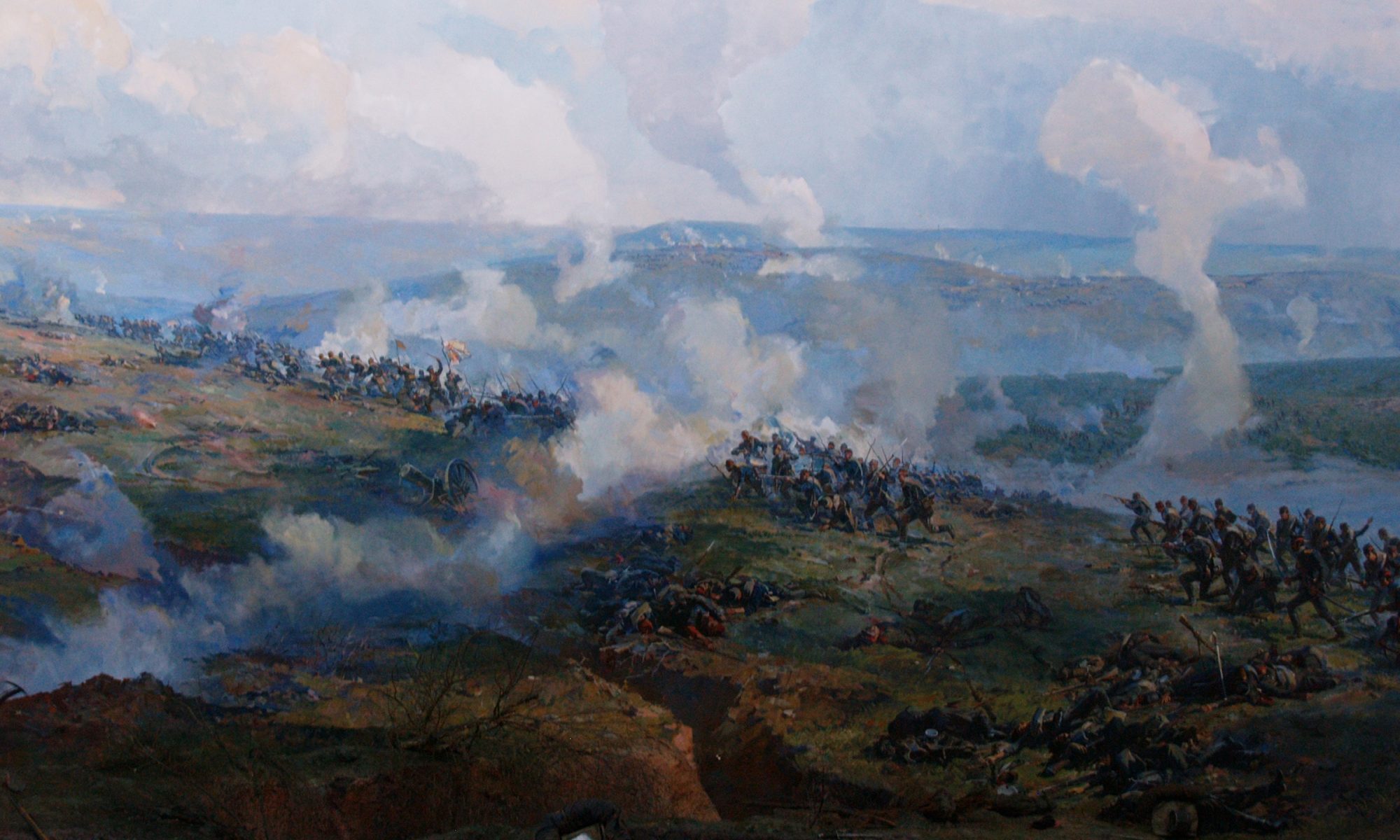
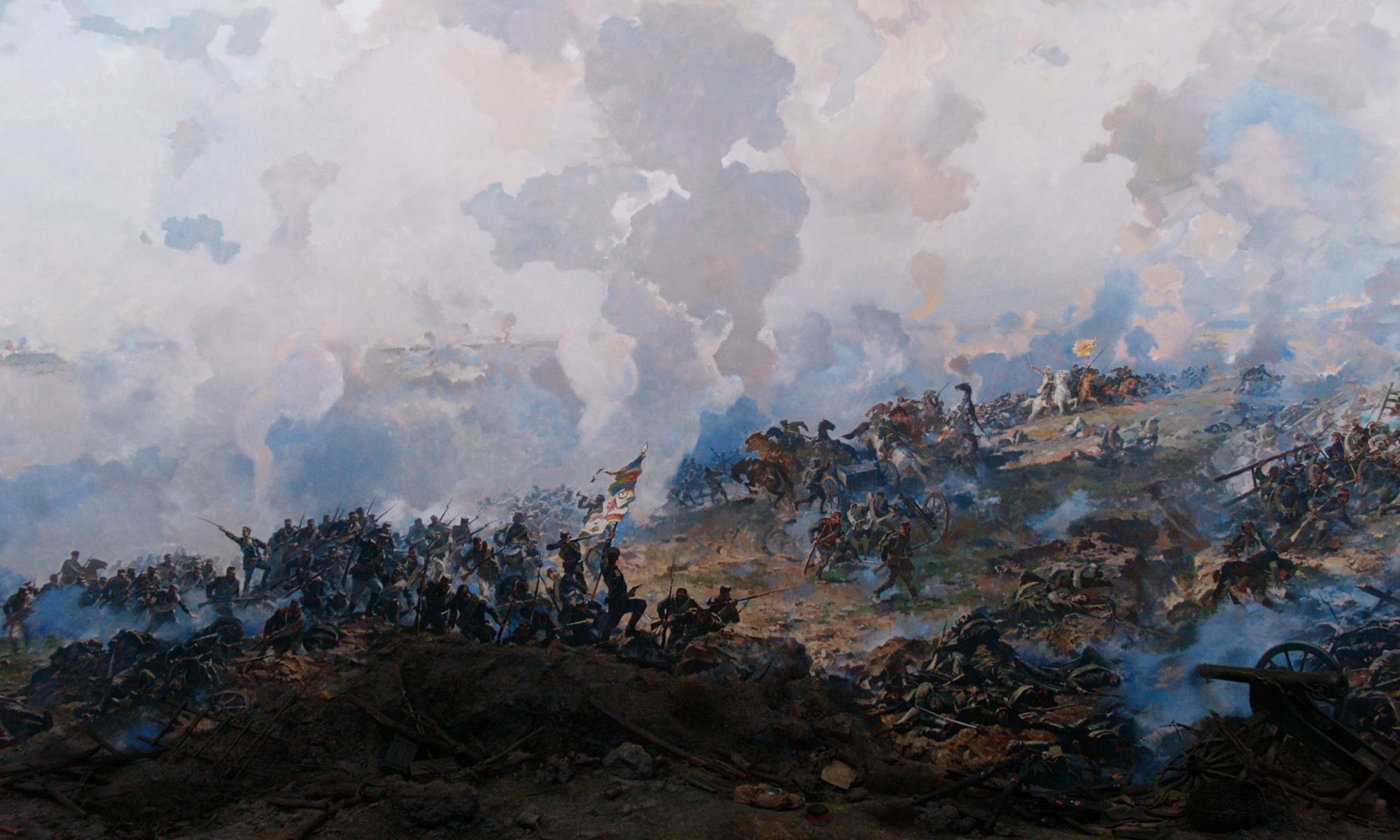
The Panorama depicts the most powerful and bloody battle for the town of Pleven – the third attack (11th – 12th September 1877). Visitors find themselves in the centre of the battlefield, on the highest hill near the town, at the Ottoman lines between the redoubts “Kovanluck” and “Issa Agha”. The town and the surrounding hills are visible from that place; you can see the attacking Russian and Romanian regiments, the defending Turkish troops, the Russian headquarters and Osman Pasha’s battle camp. On that day Russians and Romanians attacked the town from the east, south-east and south.
An event of the first priority was the battle in the south where General M. D. Skobelev and his soldiers took part. The drama of the situation and the pressure of the battle on the Green hills are depicted by means of art. That is the battle of the Russian warriors attacking the Ottoman fortifications “Kovanluck” and “Issa Agha” under the enemy’s heavy fire.
You can see the culmination when General Skobelev, famous not only for his military talent, but also for his courage, having exhausted all possible means, personally led his detachment to battle.
After a short hand-to-hand fighting “Kovanluck” was taken. An hour later the other fortification “Issa Agha” was taken, too. For the first time the Ottoman defense lines were broken in depth and the doors to Pleven were opened. For 30 hours, without any rest or help, Skobelev’s warriors drove back the Ottoman soldiers five times. On the other two positions of the frontline the attack was unsuccessful and the Russian army retreated on 11th September. The only soldiers that went on fighting were from Skobelev’s detachment. They fought against two-thirds of Osman Pasha’s army. The Russian commanders considered that the attack was unsuccessful and refused to send reinforcements. The last defenders of the Green hills did their military duty and left the bloody height on 12th of September by order of the Russian high-command.
You can see Russian doctors, nurses and hospital attendants fulfilling their humane duties on the battlefield. The local Bulgarian people also helped the Russian soldiers in every possible way.
Although the Russian and Romanian soldiers gave evidence of courage, bravery and strength, the third attack was unsuccessful. There was a great loss of life. 6500 people from General Skobelev’s detachment were killed or wounded, that is why the valley in front of the Turkish fortifications, soaked with their blood, was named “The Valley of the Dead”.
A total of 3000 Romanian and about 13 000 Russian soldiers were killed or wounded.
The repeated failure and the numerous casualties made the Russians change the tactics. A three months’ blockade of Pleven under the command of General Totleben began. The Turkish soldiers were physically exhausted. Feeling uncertainty and fear, the Turkish army had to make a fateful choice.
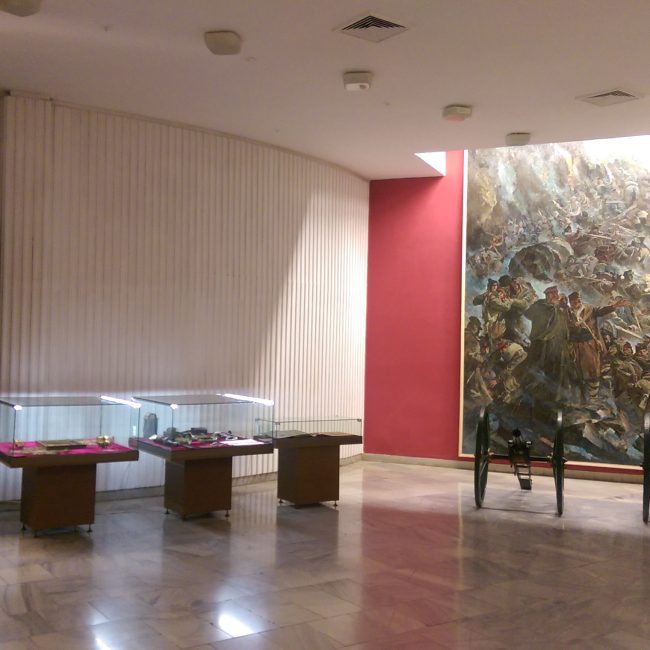
Diorama
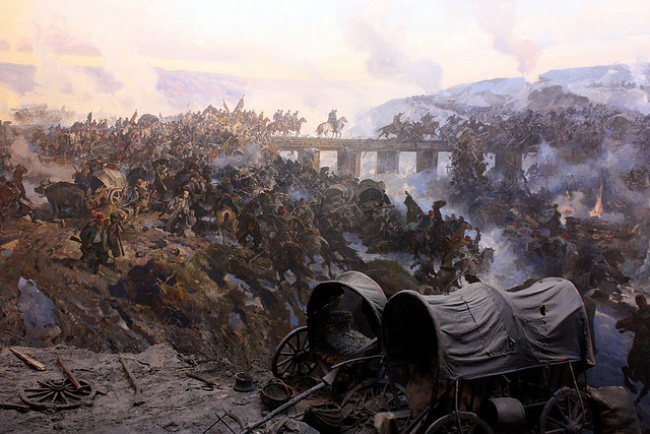
The canvas (17 x 5 m) depicts the last battle for Pleven by the river Vit on 10th December 1877. The surface together with the foreground is 150 sq. m.
On the 28th November / 10th December 1877, after 3 months of isolation, Osman Pasha tried to break through the blockade on his way to Sofia. After a bloody battle by the river Vit, the corps of General Ganetsky defeated and captured the 43 000-strong Turkish army. Marshal Osman Pasha, one of the most talented Ottoman commanders, was defeated. 10 pashas, 128 staff officers, 77 heavy guns and banners were captured.
Final Hall
Two paintings (4 x 3.60 m) depict the surrender of Osman Pasha and the Russian army crossing the Balkan range in winter.
The liberation of Pleven is a turning point in the course of the war. Having surmounted the most difficult obstacle on its way, the Russian army had to cross the Balkan range in winter – a military operation thought by the specialists to be impossible. Only a month and a half later the Ottoman government asked for peace. On 19th February (3rd March) 1878 the peace treaty between the Russian and the Ottoman Empire was signed in San Stefano, under which Bulgarian nationality was officially restored.
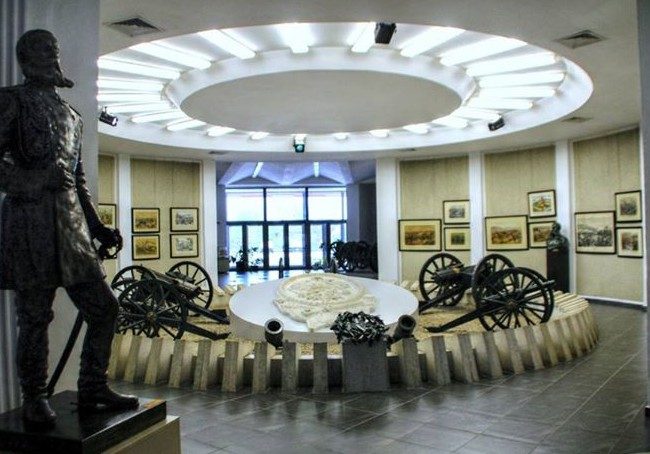
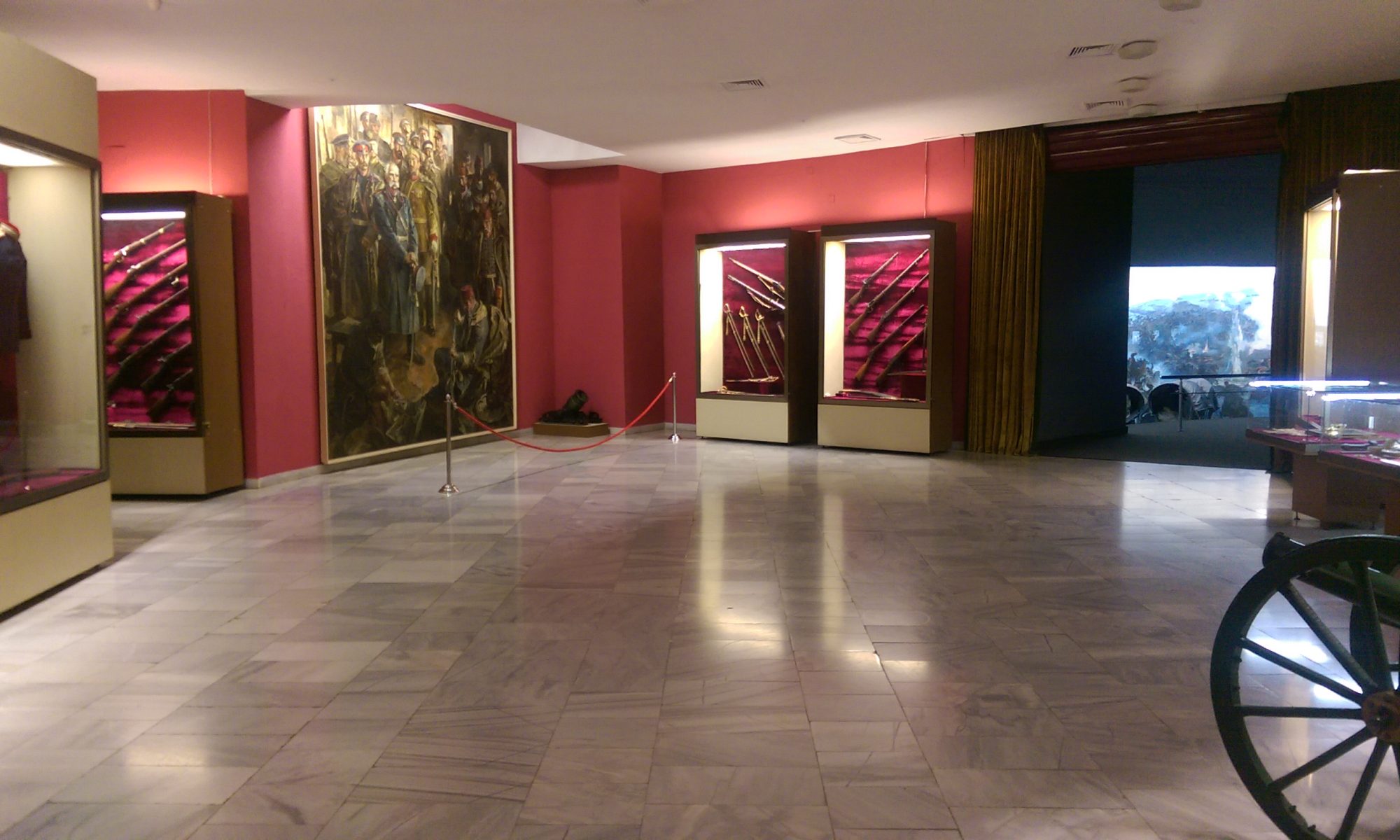
There are also military uniforms, weapons and artillery belongings from the Russo-Turkish war displayed in the final hall.
Opening hours
Summer (1st April – 30th September)
9:00 – 12:00 12:30 – 17:30Winter (1st October – 30th March)
9:00 – 12:00 12:30 – 16:30No rest day.
Admission fees (EUR):
Adults – 5.11 €
Visitors 65 years and over – 2.56 €
Pupils and students – 1.53 €
Visitors with disabilities, children from residential care institutions and social homes – free
Children 7 years and under – free
Family ticket (two parents with up to three children – 7-18 years of age) – 9.20 €
Family ticket (one parent with up to three children – 7-18 years of age) – 5.11 €Guided tours:
Guided tour in a foreign language – 10.23 €
Guided tour in Bulgarian with interpretation – 7.16 €
Photography with a camera or mobile phone (without flash) – 5.11 €
Video recording with a video camera or mobile phone – 25.56 €
Information in a foreign language – 5.11 €
Free admission – every last Tuesday of the month